LDL Small (ION)

Atherogenic small dense LDL particles quantified by ion mobility—most useful when LDL-C appears “normal” but cardiometabolic risk persists.

Authored by Chris McDermott, APRN — Practicing with autonomous authority in Florida

LDL Small (ION) reflects the concentration of small, dense LDL (sdLDL) particles measured using ion mobility (IM) technology. sdLDL is considered particularly atherogenic and has been associated with coronary heart disease (CHD) risk, including scenarios where traditional LDL-C is not markedly elevated. That said, sdLDL testing is method-specific (cutoffs vary by platform), there is no universal gold standard, and results from different analytical methods cannot be directly compared. Clinical interpretation should be framed within metabolic context and guideline-based risk assessment.

sdLDL testing Jacksonville Functional Medicine

Understanding sdLDL

🧬 What Is LDL Small (ION)

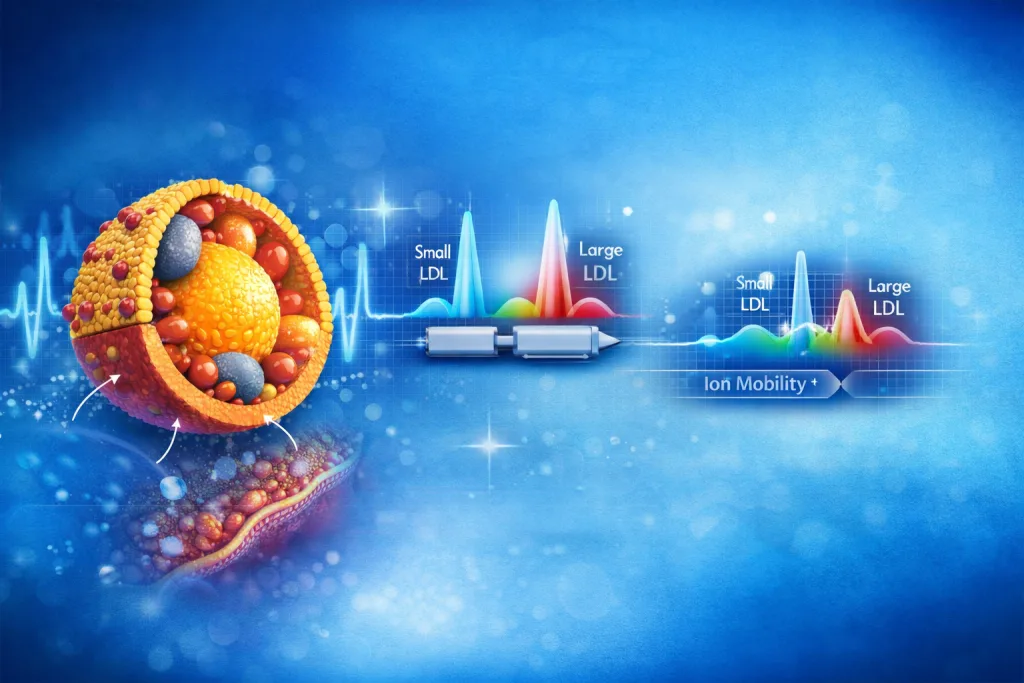
LDL Small (ION) quantifies small, dense LDL particles using ion mobility, a gas-phase differential electrophoretic technique that directly measures lipoprotein particle concentrations across a broad size range.

Key Concepts to Understand About sdLDL

sdLDL is disproportionately atherogenic

Small, dense LDL particles demonstrate features that increase atherogenic potential, including reduced LDL receptor affinity, longer plasma residence time, greater oxidative susceptibility, and increased binding to arterial proteoglycans, which supports arterial retention and plaque biology.

Strong links to insulin resistance & atherogenic dyslipidemia

Insulin resistance increases hepatic VLDL production and alters lipid remodeling via CETP and hepatic lipase, promoting formation of sdLDL and increasing particle concentration even without parallel LDL-C elevation.

Clinical value is nuanced by glycemic status

Evidence from MESA suggests sdLDL-C predicted CHD risk in normoglycemic individuals, while associations were not significant in those with impaired fasting glucose or diabetes—highlighting that sdLDL may be most informative in select populations.

📊 Standard Reference Ranges for sdLDL

Standard range (Quest Cardio IQ ION Mobility – lab-specific):

  • Optimal: < 142 nmol/L
  • Moderate: 142–219 nmol/L
  • High: > 219 nmol/L


Important:
These cutpoints are laboratory- and method-specific. There is no universally accepted gold standard, and results across methods (IM, NMR, homogeneous assays, ultracentrifugation, etc.) cannot be compared directly.

Address the root physiology behind sdLDL formation.

Book a Functional Medicine consultation to build a targeted plan focused on metabolic remodeling (nutrition strategy emphasizing carbohydrate quality/restriction where appropriate, weight and activity interventions, and evidence-based therapeutics when indicated).

Individualized care • Medically supervised • Lab-guided treatment

⚠️ Abnormal LDL Small (ION) Levels: Clinical Implications

Low LDL Small (ION)

Lower sdLDL is generally favorable in the context of cardiometabolic risk. However, interpretation should focus on the complete lipid and metabolic profile rather than sdLDL alone. (Clinical interpretation remains method-dependent.)

High LDL Small

Elevated sdLDL is associated with higher CHD risk in multiple studies and appears to contribute disproportionately to atherogenesis and residual cardiovascular risk, particularly when LDL-C is not markedly elevated but metabolic dysfunction is present.

🧪 Interfering Factors in LDL Small (ION)

Physiologic/Clinical Factors
or Assay Interference

Physiological & Clinical Factors

  • Insulin resistance → ↑ VLDL production and remodeling to sdLDL via CETP/hepatic lipase
  • Metabolic syndrome phenotype (often ↑ triglycerides, low HDL, sdLDL predominance)
  • Dysglycemia/central adiposity (promotes atherogenic dyslipidemia pattern)

Medications Affecting sdLDL

  • Statins: potent for reducing LDL particle burden (including sdLDL-P); dose/intensity matters [13]
  • Fibrates / Niacin: can shift sdLDL toward larger, more buoyant LDL and improve atherogenic dyslipidemia components [14][13]
  • Ezetimibe, resins, orlistat: reported sdLDL-lowering options in some contexts [5]
  • PCSK9 inhibitors / RNA-targeting agents: noted as therapeutic options affecting atherogenic particles, including sdLDL biology [10]
  • Clinical caveat: It remains unclear whether changing LDL size independently reduces events without lowering overall atherogenic particle number.

🔍 Related & Complementary Testing

LDL Small (sdLDL) (ION) assessment is most informative when evaluated alongside:

Apolipoprotein B (apoB)

Guidelines note that apoB (or LDL particle number) can better reflect atherogenic particle burden than LDL-C in certain populations. The Endocrine Society also notes that LDL size/density testing is not necessary in many cases because non-HDL-C and/or apoB can identify increased LDL particle number.

🩺 When to Test LDL Small (sdLDL)

  • Normal or modest LDL-C with higher suspected ASCVD risk (family history, metabolic phenotype, discordant markers)
  • Atherogenic dyslipidemia pattern (high TG / low HDL / insulin resistance)
  • Patients where risk refinement is needed beyond standard lipids
  • Normoglycemic individuals where sdLDL may add discrimination for CHD risk

🧠 Clinical Interpretation Considerations

Important Interpretation Consideration

  • Method-specific: No universal standard; do not compare values across platforms. 
  • Population nuance: Predictive strength may differ by glycemic status (e.g., normoglycemia vs diabetes). 
  • Mechanism-aware: sdLDL elevation often reflects insulin resistance-driven lipid remodeling. 
  • Clinical utility: Particle-based markers (apoB/LDL-P) may be more guideline-aligned; sdLDL can be a targeted adjunct. 
  • Outcome uncertainty: Lowering sdLDL may correlate with benefit in some studies (e.g., VA-HIT gemfibrozil signal), but more research is needed to define event reduction specifically attributable to sdLDL lowering.


✅ Clinical Summary

LDL Small (ION) quantifies small, dense LDL particles using ion mobility, a direct particle-sizing method. sdLDL is mechanistically and epidemiologically linked to atherosclerosis risk and often clusters with insulin resistance and atherogenic dyslipidemia. However, sdLDL testing is method-dependent with no universal standardization, and clinical use is best positioned for selective risk refinement—particularly in discordant cases or normoglycemic individuals where sdLDL may add risk discrimination. Integration with apoB/non-HDL-C, glycemic status, triglyceride biology, and guideline-based risk stratification is recommended.

📚 Further Reading

Concerned your LDL-C is “normal” but your metabolic risk isn’t?

If you’re experiencing metabolic or reproductive symptoms, a comprehensive Schedule a Functional Medicine cardiometabolic evaluation to interpret LDL Small (ION) in context of insulin resistance drivers, triglyceride biology, apoB/non-HDL burden, and individualized risk reduction planning

Personalized care • Clinician-directed • Data-driven treatment

Intercoastal Health

Business Hours
Monday: 9AM – 6PM
Tuesday: 9AM – 6PM
Wednesday: 9AM – 6PM
Thursday: 9AM – 6PM
Friday: 9AM – 6PM
Saturday: Closed
Sunday: Closed

Request an Appointment

Please do not include sensitive medical information.
Patient Consent & Acknowledgment